
YDTech® manufacturer of Tapered Roller Elements: Precision class 0, I, II, III, tapered rolling parts sizes on ISO 26221
Tapered roller elements are precision-engineered components with a frustum-shaped geometry designed to support combined radial and axial loads in bearing assemblies. Unlike their cylindrical counterparts, tapered rolling elements feature angled raceways that allow them to handle thrust loads in both directions when mounted in pairs.
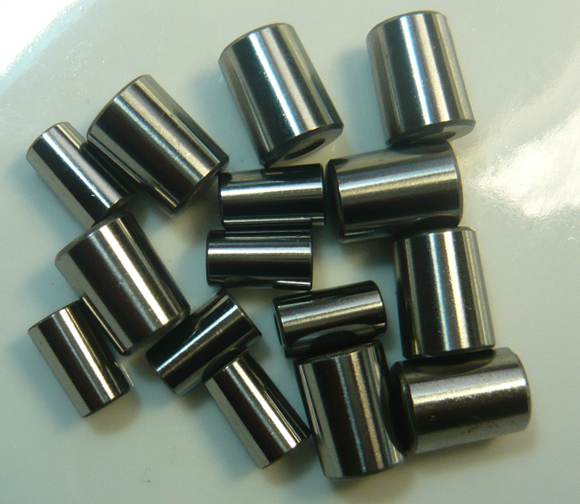
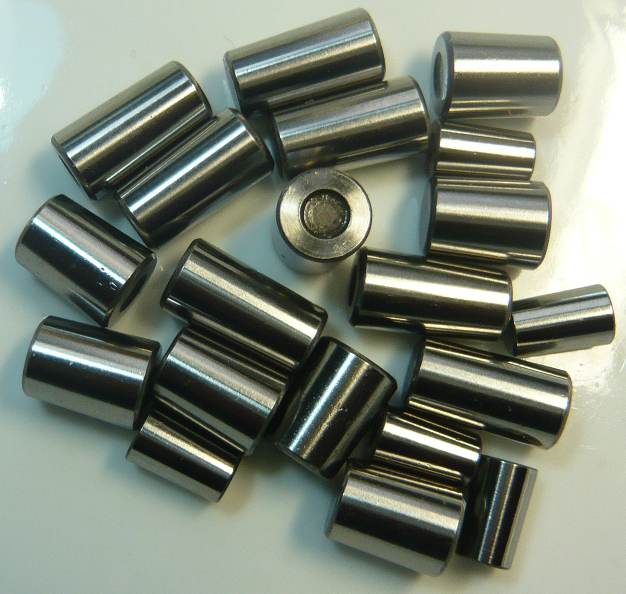
These components are defined by critical parameters including cone angle, diameter, length, and surface profile. Modern production capabilities enable tapered roller elements with logarithmic profiles that optimize load distribution and reduce edge stress concentrations. High-precision manufacturing ensures that these rolling elements meet stringent tapered roller tolerance class requirements, typically achieving Grade I or Grade II specifications.
The geometry of tapered rollers provides exceptional durability in heavy-duty applications such as automotive wheel hubs, gearboxes, railway bearings, and wind turbine transmissions. Their ability to maintain precision under high loads makes them indispensable in critical machinery where failure is not an option.
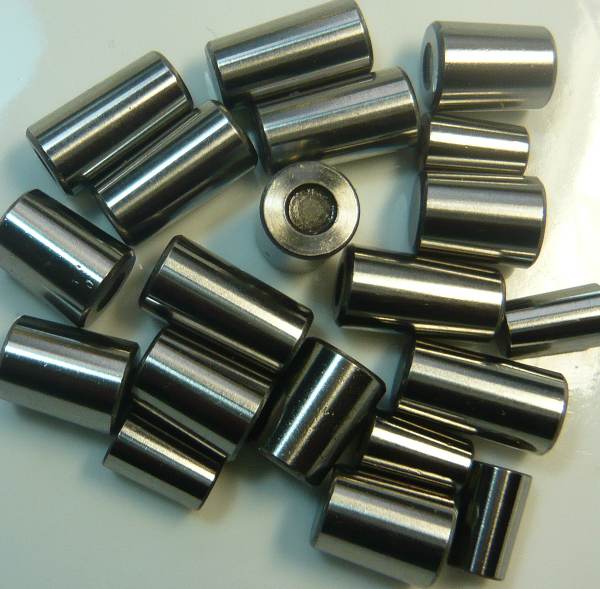
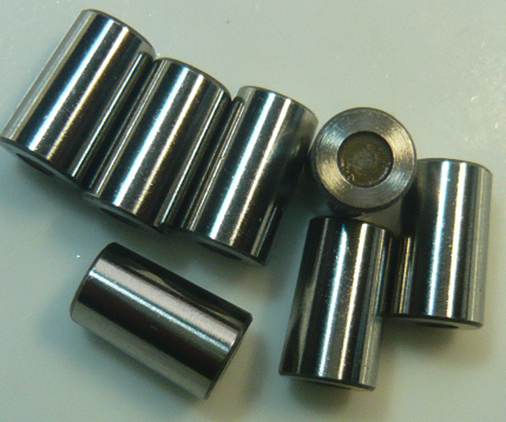
Understanding tapered roller grade specifications is essential for engineers and procurement specialists. According to GB/T 25767-2010 standards, precision grades range from Grade 0 (highest) through Grade I, II, and III. Manufacturers must demonstrate capability to consistently produce components meeting these exacting standards.
Industry leaders in rolling element production achieve dimensional tolerances of ±0.005mm in diameter and ±0.02mm in length, with surface roughness below Ra 0.25μm. These precision levels ensure proper load distribution, reduced friction, and extended service life. The international standard ISO 26221 provides additional framework for finished tapered rollers, establishing dimensional and tolerance specifications that enable global interchangeability.
tolerance and grade of tapered rollers (tapered bearing rollers)
| grade | Dw/mm | geometric tolerance | cone angle deviation | change value of batch sizes | ||||||
|---|---|---|---|---|---|---|---|---|---|---|
| exceed | to | VDwpmax | ��Cirmax | SDwmax | ��2φ upper deviation | ��2φlower deviation | VDwLmax | V2φmax | ||
| G0 | - | 10 | 0.3 | 0.3 | 1.0 | +0.6 | -0.6 | 1.0 | 0.6 | |
| 10 | 18 | 0.3 | 0.3 | 1.0 | +0.7 | -0.7 | 1.0 | 0.7 | ||
| 18 | 30 | 0.4 | 0.4 | 2.0 | +0.7 | -0.7 | 1.0 | 0.7 | ||
| G1 | - | 10 | 0.5 | 0.5 | 2.0 | +1.0 | -1.0 | 1.0 | 1.0 | |
| 10 | 18 | 0.5 | 0.5 | 2.5 | +1.0 | -1.0 | 1.5 | 1.0 | ||
| 18 | 30 | 0.8 | 0.8 | 3.0 | +1.5 | -1.5 | 2.0 | 1.5 | ||
| G2 | - | 10 | 1.2 | 1.2 | 3.0 | +2.0 | -2.0 | 2.0 | 2.0 | |
| 10 | 18 | 1.2 | 1.2 | 4.0 | +2.0 | -2.0 | 2.5 | 2.0 | ||
| 18 | 30 | 1.5 | 1.5 | 5.0 | +2.5 | -2.5 | 3.0 | 2.5 | ||
| 30 | 50 | 2.0 | 2.0 | 6.0 | +3.0 | -3.0 | 3.0 | 3.0 | ||
| G3 | - | 10 | 2.0 | 2.0 | 5.0 | +2.0 | -2.0 | 3.0 | 3.0 | |
| 10 | 18 | 2.0 | 2.0 | 6.5 | +3.0 | -3.0 | 3.0 | 3.0 | ||
| 18 | 30 | 3.0 | 3.0 | 8.5 | +4.0 | -4.0 | 5.0 | 5.0 | ||
| 30 | 50 | 3.0 | 3.0 | 10.0 | +5.0 | -5.0 | 5.0 | 5.0 | ||
| 50 | 80 | 4.0 | 4.0 | 12.0 | +5.0 | -5.0 | 5.0 | 5.0 | ||
apered rollers—also known as tapered rolling elements or conical rollers—are frustum-shaped components designed to facilitate pure rolling motion within tapered roller bearings. The defining geometric principle is that the roller's conical surface, along with the inner and outer raceway surfaces, converges at a common apex point on the bearing axis. This "apex design" ensures rolling without sliding, which minimizes friction, reduces heat generation, and extends bearing service life in high-load applications.
surface roughness of tapered rollers (tapered bearing rollers)
| grade | rolling surface (Ramax) | basis of end face (Ramax) | other, chamfer (Ramax) | |||||||
|---|---|---|---|---|---|---|---|---|---|---|
| G0 | 0.04 | 0.10 | 1.25 | |||||||
| G1 | 0.08 | 0.125 | 1.25 | |||||||
| G2 | 0.125 | 0.16 | 2.5 | |||||||
| G3 | 0.16(Dw<=30mm) | 0.32 | 2.5 | |||||||
| G3 | 0.25(Dw>30mm) | 0.32 | 2.5 | |||||||
Tapered roller dimensions typically range from 5 mm to over 100 mm in diameter, with custom sizes available upon request. The surface finish for precision-grade tapered rollers often reaches Ra ≤ 0.2 µm, achieved through centerless grinding and superfinishing processes. The most common material is high-carbon chromium bearing steel such as GCr15 (SAE 52100/100Cr6), through-hardened to 58–64 HRC for optimal wear resistance and rolling contact fatigue strength.
ball base surface of tapered rollers (tapered bearing rollers)
| base grade | SR(mm) | surface roughness | ��SR | |||||||
|---|---|---|---|---|---|---|---|---|---|---|
| from | to | max | upper deviation | lower deviation | ||||||
| SR12 | - | 200 | 0.12 | 0 | -5 | |||||
| 200 | 400 | 0 | -5 | |||||||
| SR16 | - | 200 | 0.16 | 0 | -10 | |||||
| 200 | 400 | 0 | -15 | |||||||
| SR32 | - | 200 | 0.32 | 0 | -15 | |||||
| 200 | 400 | 0 | -30 | |||||||
| SR40 | - | 200 | 0.40 | 0 | -15 | |||||
| 200 | 400 | 0 | -40 | |||||||
The primary applications for tapered rolling elements are found wherever combined radial and axial loads must be supported. Common use cases include: Tapered rollers for automotive wheel hubs and differentials — handling both vehicle weight and cornering forces Tapered rollers for heavy-duty truck axles and trailer hubs — supporting high static and dynamic loads in commercial vehicles Tapered rollers for construction equipment such as excavators and bulldozers — enduring shock loads and contaminated environments Tapered rollers for wind turbine gearboxes and industrial reducers — requiring long-term reliability and minimal maintenance Tapered rollers for railway axle journals and mining conveyor rollers — where safety and uptime are critical.
straightness of tapered rollers (tapered bearing rollers)
| Dw | straightness | |||||||||
|---|---|---|---|---|---|---|---|---|---|---|
| exceed | to | G0 | G1 | |||||||
| - | 30mm | +0.5um | +1um | |||||||
| 30mm | 50mm | - | +2um | |||||||
- home
- products
- contact
- equipments
- drive pins
- cylindrical rollers
- needle rollers
- sizes or stocks
- Logarithmic Profile
- Si3N4 ceramic rollers
- tapered rollers
- steel balls
- CNC parts
- terahertz dowel pins
- waveguide components
- NRA spherical ends
- NRB flat ends
- special ends
- medical device cavities
- PdAgCu wafer probes
- PtIr tips rings