
FAQ – Needle Rollers, Cylindrical Rollers & Waveguide Components.
1.1 What is the difference between NRB and NRA needle rollers?
Welcome to our FAQ page. Here we answer the most common questions we receive from engineers, procurement professionals, and R&D teams about our precision components – needle rollers, cylindrical rollers, and waveguide products. If you cannot find the answer you are looking for, please contact us directly.
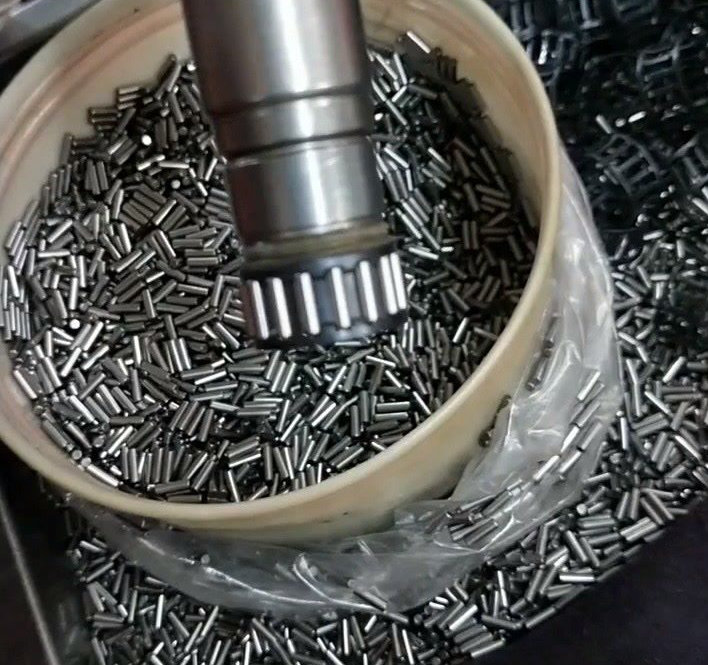
NRB stands for flat end needle rollers – the ends are planar with profiled relief edges. NRA stands for round/ball end needle rollers – the ends are rounded or spherical.
1.2 Do you stock standard sizes or only make custom orders?
We maintain a large inventory of standard sizes for both NRB and NRA types, covering diameters from 1.0 mm to 20 mm and lengths from 3 mm to 80 mm. Standard items can be shipped within 24 hours.
1.3 Can you produce non-standard or custom needle rollers?
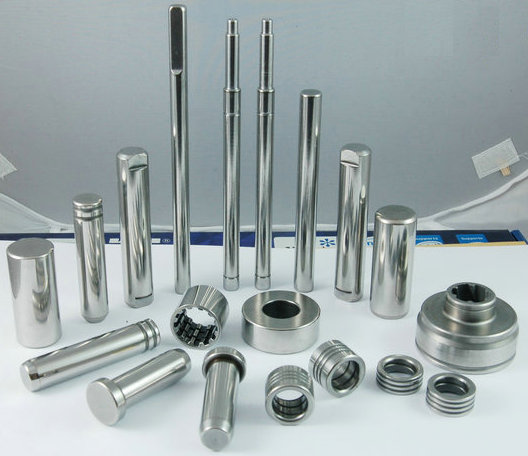
Yes – we are a specialized manufacturer with strong customization capabilities. We can produce needle rollers with: Non-standard diameter-length combinations. Tighter tolerances than standard G2/G3 grades. Special materials (stainless steel, ceramic, high-temperature alloys). Custom end profiles beyond NRB/NRA/NRR. Special heat treatment and surface finishes. Minimum order quantity for custom items is as low as 100 pieces for prototype batches.
1.4 What materials do you use for needle rollers?
Our standard material is 100Cr6 (AISI 52100) bearing steel, hardened to 60–66 HRC. We also offer stainless steel (440C, 316), ceramic materials, and high-temperature alloys upon request for specialized applications.
1.5 What standards do your needle rollers comply with?
All our needle rollers are manufactured to ISO 3096:2018 and DIN 5402-3 standards. Precision grades available: G2, G3, G5, and G10.
1.6 How do I request a quotation for needle rollers?
Please provide us with: Diameter and length. Tolerance requirements. End type (NRB, NRA, NRR, or custom). Material preference. Estimated annual quantity. We respond to all inquiries within 24 hours with competitive manufacturer-direct pricing.
2.1 How do cylindrical rollers differ from needle rollers?
The primary difference is the length-to-diameter ratio. Needle rollers have a length that is at least three to four times their diameter. Cylindrical rollers have a smaller length-to-diameter ratio (typically 1:1 to 3:1). This makes cylindrical rollers more suitable for applications requiring higher load capacity in a shorter rolling element, while needle rollers excel in compact, space-limited designs.
2.2 What applications use cylindrical rollers?
Cylindrical rollers are widely used in: Tripod-type homokinetic universal joints (automotive drivetrains), Heavy-duty industrial gearboxes, Large bearings for wind turbines, Construction and mining equipment, Railway rolling stock.
2.3 Can you produce cylindrical rollers with flat or crowned end faces?
Yes. We offer both flat-end cylindrical rollers and crowned (spherical) end cylindrical rollers. Crowned ends are often preferred in applications where minor misalignment or edge loading may occur.
2.4 What diameter range do you cover for cylindrical rollers?
We produce cylindrical rollers in diameters from 3 mm to 100 mm and lengths from 3 mm to 120 mm. For dimensions outside this range, please contact our engineering team – we are happy to evaluate custom requests.
2.5 Do cylindrical rollers require different heat treatment compared to needle rollers?
The heat treatment requirements are similar in terms of hardness targets (typically 60–66 HRC for bearing steel). However, cylindrical rollers often require greater case depth due to their larger cross-section and higher load expectations. We optimize heat treatment parameters for each specific diameter and material to ensure optimal core hardness and case depth.
3.1 What are waveguides, and why do you manufacture them?
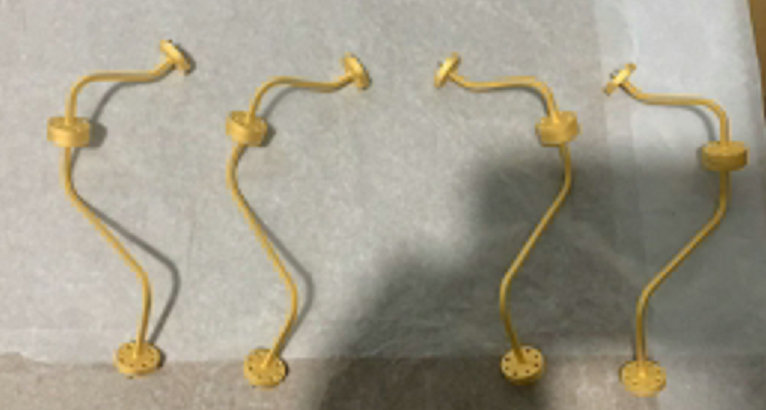
Waveguides are hollow metal tubes used to guide electromagnetic waves – primarily microwaves and radio frequency signals – with minimal signal loss. They are essential components in radar systems, satellite communications, 5G infrastructure, and aerospace applications.
As a precision component manufacturer, our expertise in high-accuracy grinding and machining naturally extends to waveguide components. We bring the same dimensional precision and surface quality to waveguide manufacturing as we do to our rolling elements.
3.2 What materials do you use for waveguides?
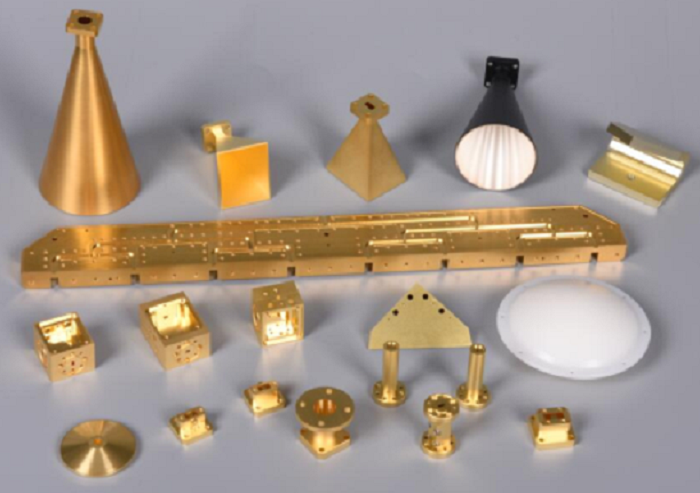
Our waveguides are manufactured from: Copper and copper alloys – excellent conductivity for general RF applications, Aluminum – lightweight option for aerospace and portable systems, Brass – good balance of performance and cost, Stainless steel – for high-strength or corrosive environments, Material selection depends on your specific application, frequency range, and environmental requirements.
3.3 What machining capabilities do you offer for waveguides?
We offer complete waveguide fabrication including: Precision milling and drilling, Boring and reaming to tight tolerances, Surface finishing to achieve low signal loss, Flange machining and assembly, Our facility is equipped with CNC machining centers that enable us to produce complex waveguide geometries with high repeatability.
3.4 Can you produce custom waveguide designs?
Absolutely. We work from customer-provided drawings, sketches, or performance specifications to manufacture custom waveguides. Our engineering team can also assist with design optimization for manufacturability and cost reduction.
3.5 What quality control measures do you apply to waveguides?
We inspect every waveguide component for: Dimensional accuracy – using CMM (coordinate measuring machines), Surface finish – to ensure low insertion loss, Material integrity – with certification and traceability, Flange flatness and squareness – critical for proper assembly, We can provide full inspection reports upon request, including material certificates and dimensional test results.